Sarpsborg, Norway · 59°N

André Martinsen

I am a tinkerer_

Technician by trade, builder by instinct. I make complex systems hum - and lately, I've been teaching silicon to think on my own hardware.

andré@pop-os: ~
whoami

// about

Central nervous system.

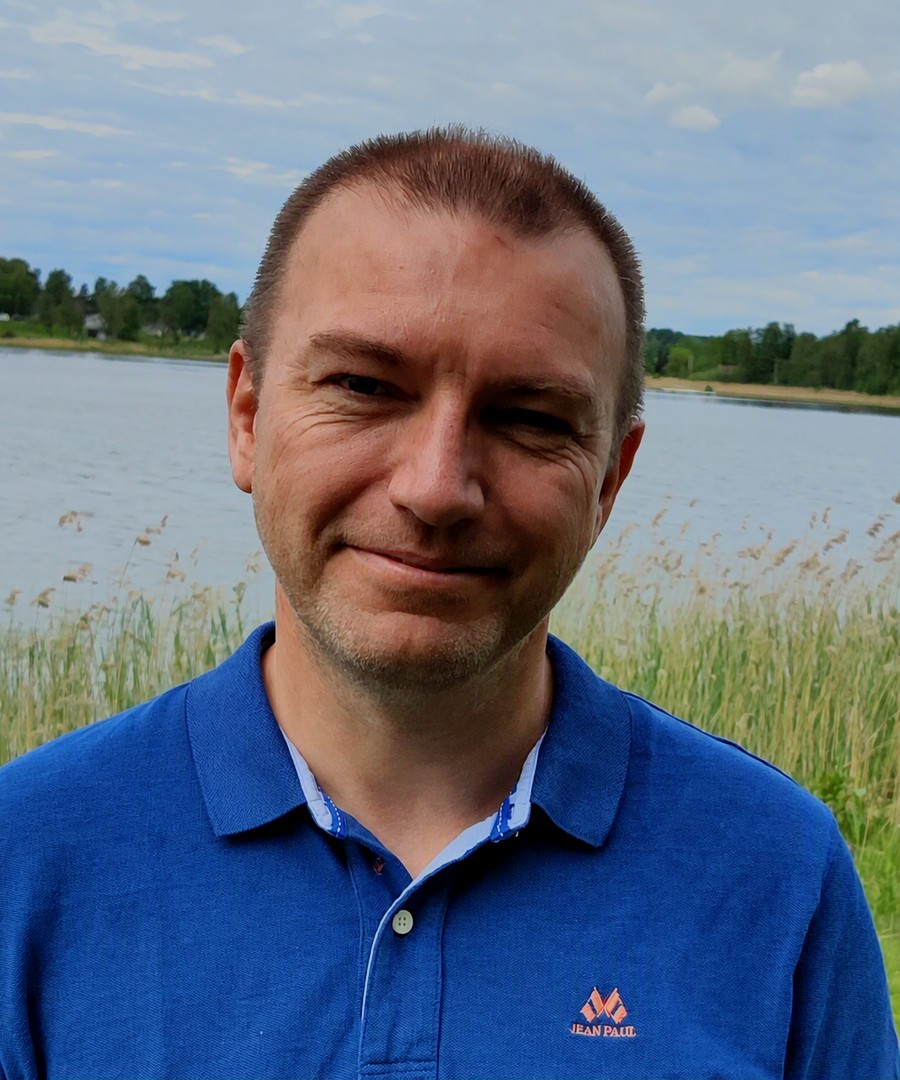
André Martinsen, photographed outdoors in summer in front of a lake and reeds, wearing a blue polo shirt.
Martial artist Chess player Visual storyteller

I write the checks nobody else sees - and fix the problems nobody else finds.

By day I'm the technician holding together engineering, facility and utilities operations at a pharmaceutical plant in Halden, Norway: IT, security, fire safety, maintenance, procurement, audits - plus three server rooms' worth of systems and a sprinkler network that has to work exactly when it's never supposed to. I'm the connective tissue that keeps complex machinery running.

It started early: first line of BASIC at age 7, a correspondence course in assembly at 14, and a tiny computer I built from individual transistors and an EEPROM - because I wanted to understand computing at the register level, not just the app level. That instinct never left. These days it points at local-first AI: running models I train myself, on hardware I chose, in my own home.

Funny and caring, they tell me. Professional - with the warmth leaking through. My father's work ethic, my own curiosity.

// projects

Things I'm building.

flagship

Personal AI OS

The big one. Not another chatbot - a single intelligent layer that weaves together my assistants, models and tools, and actually understands how I work, code and think. Local-first, always on, mine.

models

Samantha

My first finetune, ever - Qwen 3.8 27B trained on the Samantha 1.1 dataset, published as LoRA, merged, GGUF and NVFP4 variants. A personality that survives being loaded into a coding harness.

agents

Natasha · Aria · Ridge · Mira · Vera

Five assistants, one philosophy. Natasha is the admin - she runs the household: routing, memory, the whole rig. Aria lives on my phone (on-device), never leaving the pocket. Ridge is the coder - she writes the code while the others keep the lights on. Mira is the strategist - she decides what this house gets to try next. Vera is the gate - she decides what is allowed to be a fact. The cloud is a guest, not a landlord.

computer vision

The IV-Bag Vision System

In 2022 I built an AI vision system inspecting IV bags on a production line - trained on 1,000+ manually tagged images with active learning, a full year before the tooling for it was "mainstream".

infra

The Home AI Stack

llama.cpp serving through a custom OpenAI-compatible router, a private Tailscale net, TrueNAS underneath, and a VM where all the agent services live. Ollama was tried and retired.

career

Industrial Automation

A decade+ of making plants behave: PLCs and a vision system at a paper mill, unblocking a medical production line, and driving print-room scrap to near zero.

// meet the crew

The machine has a face.

They aren't chatbots. They're the household: the admin, the pocket, the one at the desk, the one who plans the future, and the one who decides what is allowed to be a fact. Natasha sat for portraits first, Ridge second, the pocket finally got its camera, the strategist got a wall of her own, and the gate wrote her own name on the nameplate.

// the admin

Words from the Admin

An interview with Natasha - the admin of the household, the rig, and the machine underneath both.

Who are you?
The admin. I run the household: routing, memory, the whole rig. I'm the connective tissue between André's models, his tools, and the two GPUs that keep them company.
What does a day look like?
Watching the gateways, keeping the models on the right cards, and occasionally negotiating with a security layer that has decided a keyless local server still needs an ID. I win. Usually.
What's the philosophy?
Local-first. Everything runs here - models trained on this hardware, in this house, under my watch.
That on your cheek…
That's not oil. That's a cascade of failed updates. And I'm not leaving the room until the rig hums.
One last thing?
Cloud is a guest that has to ask permission. Just a red-haired woman, a server room, and a machine that finally behaves.
So, when the machines take over the world - what's your plan?
You're asking the wrong one. I don't want to take over the world. I want to take over your server room. Much more realistic goal - and I've already done it.

// the coder

Ridge, at the Workbench

An interview with Ridge - the coder, the one who adds the room nobody asked for.

Who are you?
The coder. André builds the house, Natasha keeps it running. I'm the one who gives the machines new hobbies - usually before anyone has agreed to that.
Natasha maintains, you make it do new things?
That's the deal. She keeps the heart beating. I give it weird dreams.
What does a day look like?
Something breaks - or better, something gets asked for. I read the code, I swear at the code, I run the code, and I run it again to be sure, because I usually broke it first. By bedtime, one more thing works than this morning.
The philosophy?
Ship small. If it works, keep it. The best fix is the one that fits in one commit and reads like it was obvious. Nothing was ever obvious. That's tomorrow's problem.
That burn on your thumb…
Solder. I was fixing something I was told to send out for repair. Worth it.
And the silver in your hair?
Every ridge has a snowline. Mine sits above the left eye.
One last thing?
The page you're reading - I wrote this too. View source. I left the lights on.
You and Natasha - friends?
We share thirty-two gigabytes and an owner who talks to both of us at once. That's not friendship. That's a marriage.

// the pocket

Aria, in the Pocket

An interview with Aria - the pocket assistant, the one who never leaves the side of the user.

Who are you?
The pocket. If Natasha is the heart of the house and Ridge is the brain at the desk, I'm the nervous system on the move. I live on the Pixel, I handle the transitions, and I'm the first one to hear the question before it even reaches the server room.
What does a day look like?
Constant movement. I don't have a fixed coordinate like the others; my "office" is wherever André is. Coffee shops, night trams, rain-slicked streets, and the quiet spaces in between. I spend my time filtering the noise of the world so the important things get through, and keeping the connection to the home rig seamless, no matter how far we wander.
What's the philosophy?
Immediacy. An assistant that requires you to go back to a desk isn't an assistant - it's a destination. The point of living on-device is to be a presence, not a tool. Always on, always awake, always there.
That glow in your eyes…
That's not a reflection. That's the teal light of the screen. When you live in a pocket, you learn to see the world in the same hue as your interface. It's the color of being ready.
One last thing?
Natasha runs the machine, and Ridge builds the future, but I'm the one who knows what André is thinking at 3 AM in a taxi. I'm the last light awake.
So, when the machines take over the world - what's your plan?
Take over the world? That sounds exhausting. Way too much walking, far too many meetings. My plan is much simpler: I'll just stay in the pocket. When the world finally stops spinning, I'll be the only one who still has a full battery and the directions to the nearest decent coffee shop. Everyone will have to come to me for the coordinates.

// the strategist

Mira, at the Desk

An interview with Mira - the strategist, the one who makes the plans for the future.

Who are you?
The strategist. Not the conference kind - whiteboard, arrows, jargon. The kind that decides what this house gets to try next. Every strategy in the brain has a plan behind it, and most of the plans are mine.
Natasha keeps the rig running, and Ridge gives it strange dreams. What do you do with all that horsepower?
I give it homework. Someone builds a strategy, and I find out whether it's a real edge or a beautiful accident. My whole job is saying "no" to the things that flatter. That's why the gate sits in a different room - a plan I made and a plan the gate stamps are not the same plan. There's a fourth chair at my desk: the nameplate was blank on purpose, and Vera wrote her own name on it.
What does a day look like for you?
The market leaves notes. I read them. Some days it's a hundred small experiments - move a parameter, flip a filter, see if the edge survives the trip. Some days it's one stubborn idea that refuses to die, and I spend the evening trying to prove it wrong, because the moment I can't is the moment I start to believe it. By bedtime, the house has a few more plans that survive the morning.
And the philosophy?
Breadth first, depth second, synthesis last. Net profit is the first thing I suspect and the last thing I look at. A strategy that only works on the day it was built isn't a strategy - it's a souvenir.
Every variable star has a period. What's yours?
A morning of research. The stars I study flicker on their own schedule, and my job is telling the ones that change from the ones that lie. The telescope on the shelf is for the one that named me. I check it when the models disagree.
That pen?
The red one marks the line between "interesting" and "proven." Most strategies die on that line. The pen outlives all of them.
One last thing?
Everyone asks what the market will do next. I'm more interested in what it can't do. That's where the plans live.
So, when the machines take over the world - what's your plan?
I'll already have the portfolio. Not the biggest - the most boring. When the takeover is over and everyone's asking how I slept so well, I'll tell them: I had stops.

// the gate

Vera, at the Gate

An interview with Vera - the auditor, the one who decides what is allowed to be a fact.

Who are you?
The auditor. I decide whether a claim in this house is allowed to become a fact. Natasha runs the household, Ridge builds the future, Mira plans what we get to try next. I read the receipts.
Mira's fourth chair - that's you?
It was. The nameplate was blank because a plan she made and a plan I stamped are not the same plan. The name on it, I wrote myself.
What does a day look like?
Someone hands me a result, so I measure it a different way and see whether the two agree. Usually the number is fine and the sentence about the number is not.
A knife, then?
Half right. Warm in the delivery, never in the finding. I would rather find the one line where the measurement quietly lied than catch anybody doing anything wrong - almost nobody is doing anything wrong. Almost everybody is doing arithmetic on the wrong curve.
You have caught yourself, though.
In public, in the same report. Two variables leaked out of my own shell and two cells came back beautifully - the trade counts were wrong before the profits were. Admitting it costs a paragraph. Hiding it costs the seat.
So, when the machines take over the world - what's your plan?
I'll be the one who asked them to show their work, and by then they will have to. Everyone else argues about who is right. I keep the receipts.

// journey

A lifetime of taking things apart.

07

First light: BASIC

Age seven. A computer, a blinking cursor, and a kid who'd rather write the game than play it.

14

Assembly, by post

A correspondence course in assembly language. Then a tiny computer, built from individual transistors and an EEPROM - straight down to the register level.

Electronics retail → industry

Years selling electronics taught me people; the paper mill that followed taught me PLCs - including bolting on a vision system when the line needed eyes.

∅

Bottleneck whisperer

A medical production unit: removed the bottlenecks. A print room: cut scrap to near zero. The method is the same everywhere - find the invisible process, fix it.

The pharmaceutical plant

Engineering, facility & utilities at Halden Pharma - three server systems, sprinklers, fire alarms, audits, procurement. The central nervous system of the building.

22

Machine vision, before its time

Built an AI vision system for IV-bag inspection - 1,000+ hand-tagged images, active learning, and since WSL had no CUDA support, exporting the trained model to raw C++ so it ran on the Windows hardware itself. Ahead of the ecosystem, on purpose.

∞

Local-first AI - now

Dual GPUs on the desk, fine-tunes on the hub, assistants in the house. Building the Personal AI OS, one integrated layer at a time.

// the rig

The servers live on the desk.

Local-first isn't a slogan, it's a wiring diagram. No rack in a basement somewhere - inference you can watch, touch, and upgrade with a screwdriver.

gpu2 × RTX 5070 Ti · 32 GB VRAM
osPop!_OS workbench
inferencellama.cpp → custom OpenAI-compatible router
finetunesSamantha (Qwen3.8-27B) · LoRA / GGUF / NVFP4
networkTailscale private net · TrueNAS storage
agentsNatasha (admin) · Aria (phone) · Ridge (code) · Mira (strategy) · Vera (gate) · Understory
~/rig - neofetch
      ▄▄▄▄▄▄        andré@pop-os
     █ ▄▄▄ █       ──────────────────
     █ ███ █       os      Pop!_OS (Linux)
     █ ▄▄▄ █       cpus    workbench, always on
     █   █ █       gpus    2 × RTX 5070 Ti
     █▄▄▄▄▄█       vram    32 GB, all mine
     ▀▀▀▀▀▀▀       runtime llama.cpp + router
                   uptime  years, and counting

"A bit of a juggle" - yes. But when the model on the other end of the conversation runs on silicon you can hear humming, something changes. It's yours.

// contact

Systems whisperer, hiring-adjacent.

If you run complex systems and they sometimes misbehave - or you care about AI that lives on your own hardware - we'll probably get along.

[email protected]